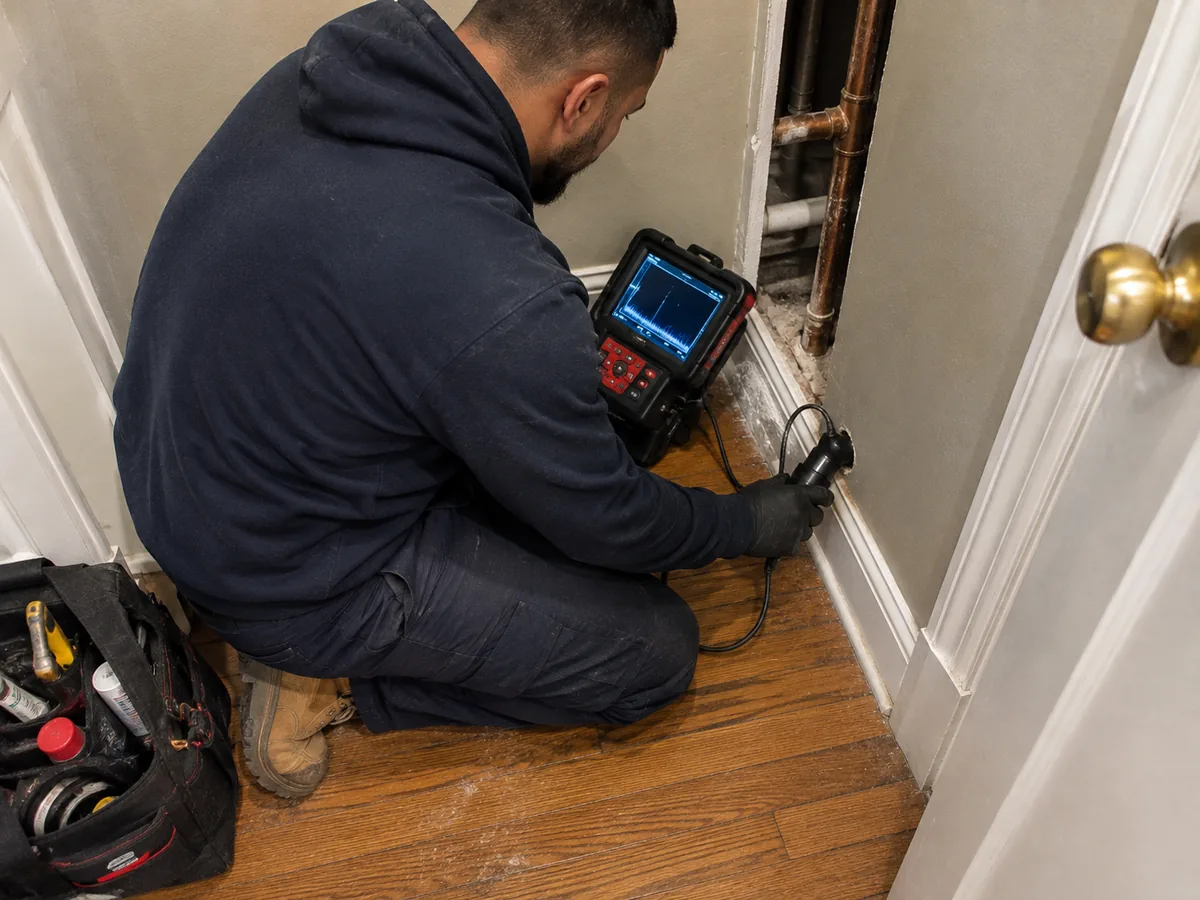
GO2 Plumber provides water leak detection in NYC for hidden supply and drain leaks, ceiling stains and unexplained damp areas. We use the symptoms, accessible plumbing and appropriate diagnostic tools to narrow the source, explain any access needed and plan the repair.
Available 24 hours · 7 days · All 5 NYC Boroughs · Upfront Pricing
Licensed NYC plumbers only. Answered 24/7.
A hidden leak is an investigation before it is a repair. GO2 Plumber starts with the visible moisture, the timing of the problem and the plumbing that could be involved. A ceiling stain after a shower, a supply leak that continues when fixtures are idle and dampness near an appliance need different checks. The aim is to narrow the source with useful evidence before agreeing on repair access.
Acoustic listening and thermal imaging can support that process when the conditions suit the equipment. Acoustic checks are useful for some pressurized supply leaks. Thermal imaging reads surface temperature patterns; it does not see through walls or directly identify a failed fitting. Accessible inspection and other appropriate checks are used alongside those findings. If a wall, ceiling or floor needs to be opened, the proposed access and next step should be explained first.
Tell us whether the problem appears during fixture use, stays wet continuously or changes after rainfall. Have previous repair notes and safe photos ready. For a suspected leaking drain, see drain leak detection in NYC. For a shared building concern, arrange the superintendent or manager who can provide access beyond the room where water has become visible.
We evaluate all visible signs and symptoms to narrow down the leak location.
We choose checks for the suspected source and available access, then consider the findings together.
Findings, proposed access and repair pricing are discussed before additional work is approved.
The approved repair is checked for the affected pipe or fixture, with follow-up and warranty terms stated in the scope.
Beyond the equipment used, here's the actual methodology behind finding a hidden leak:
We check the affected area and surrounding systems — visible plumbing, recent water usage patterns, and secondary damage like staining or warping that hints at the source.
Appropriate acoustic, thermal and other checks can help narrow the area to investigate before repair access is planned.
We compare observations and available checks to identify the affected pipe or fixture, explaining what is confirmed and where further access may be needed.
Finding the leak is only half the picture. We also determine the underlying cause — age-related failure, a bad connection, freeze damage, or something else — since that determines whether a spot repair or a broader fix is the right call.
Different leaks hide in different places — and need different detection methods.
Suspected water-line leaks beneath concrete require assessment of the pipe route and site conditions. Any slab access is discussed before work begins. See Water Line Replacement if replacement needs to be compared with a point repair.
Hidden supply leaks can appear in walls, ceilings or floors. Observations and appropriate diagnostic checks help narrow the source. See Pipe Repair & Repiping once the affected section is identified.
Water escaping during fixture use can involve a drain connection, branch or shared stack. See Drain Leak Detection NYC to discuss investigation, access and the checks needed before repair.
Failing supply connections at water heaters, dishwashers, and washing machines. If the source turns out to be the unit itself, see Water Heater Repair.
Common in NYC multi-unit buildings — water coming from the apartment above. We coordinate with building management to trace the source and document findings for co-op boards — see Apartment Building Plumbing.
GO2 Plumber takes leak-detection requests across all five NYC boroughs and Nassau County. Call with the full address, symptoms and access contact to confirm availability.
A leak detection appointment should identify the problem being investigated and what the initial assessment includes. Ask which areas need access, who must be present and whether a proposed tool or test is appropriate for the suspected pipe. A diagnostic image or camera recording is useful evidence, but the findings should also explain what has been confirmed and what remains uncertain.
Detection, plumbing repair and finish restoration can have separate scopes. Once the affected pipe or connection is identified, discuss the proposed repair, checks afterward and any further access. A wall or ceiling opened for plumbing work may need restoration by another provider. Keep the findings and invoice so the owner, manager or business has a clear record for follow-up.
For active water loss or wastewater entering an occupied space, call about emergency plumbing availability and describe the current conditions. Keep people clear of an unsafe affected area and tell building staff if shared piping may be involved. For a scheduled visit, have the address, access contact, symptoms and any recent plumbing work ready.
Investigate leaks linked to fixture use, drain connections, branches and shared stacks.
View service →02Trace hidden supply, drain and under-floor leaks in Brooklyn homes and businesses.
View service →03Hidden supply and drain leak investigation for Lower West Side apartments and businesses.
View service →04Investigate recurring stains and hidden plumbing leaks with shared-building access planning.
View service →05Investigate hidden supply and drain leaks in Prospect Heights homes and businesses.
View service →If the affected property is on the Upper West Side, describe whether the moisture is inside one apartment or may involve shared building plumbing. Notify the superintendent or manager if another unit or a common service area may be needed for investigation. Our Manhattan plumbing overview explains building access and service coordination across the borough.
For a co-op, condo or managed property, send the current contractor package, insurance instructions, work hours and management contact before planned service. Identify who approves common-piping work and any additional scope, and arrange superintendent access where needed. Our building plumbing requirements guide explains COIs, license verification, approvals, shared-service notices and applicable project closeout records. The documentation should match the actual work being proposed.
"Fastest response I've ever had for a burst pipe. They arrived in 20 minutes and had it fixed within the hour. Absolute lifesavers!"
"No phone tag, just called and they showed up exactly on time. Very professional and tidy work. Will use again."
"Highly recommend for commercial situations. We've used GO2 for our facility several times. Technical expertise is top notch."
Call with your address and current symptoms to confirm availability and an estimated arrival.
Serving all 5 NYC boroughs + Nassau County · Upfront Pricing · Flat-Rate Pricing · All 5 Boroughs